

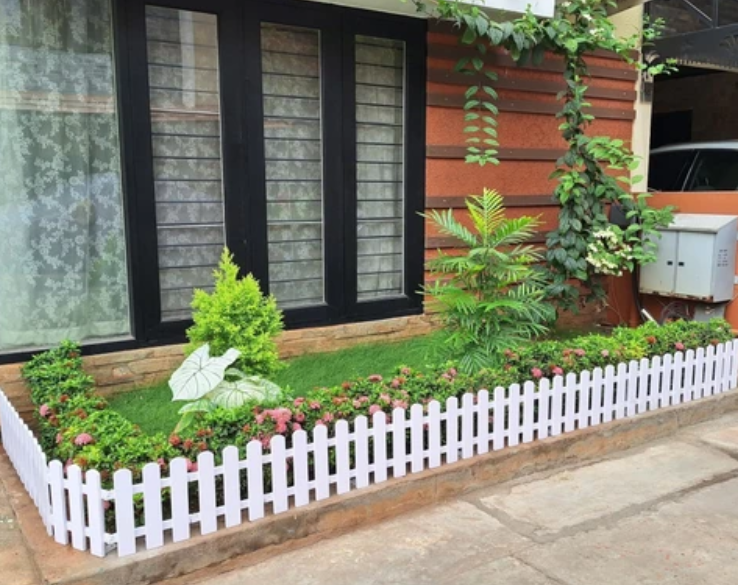
Your garden fence does more than mark a boundary — it provides privacy, security, wind protection, and sets the visual tone for your entire outdoor space. But Dublin’s weather is punishing on fencing. Heavy rainfall, coastal winds, winter frosts, and constant dampness mean that even well-installed fences need attention, and poorly installed ones can fail within just a few years.
This guide covers everything Dublin homeowners need to know about garden fence installation and repair — from choosing the right material and understanding Dublin costs to knowing when to repair versus replace and what planning permission rules apply.
Types of Garden Fencing Available in Dublin
Timber Panel Fencing
Timber panel fencing remains the most popular choice for Dublin gardens. Standard panels are 6ft (1.83m) wide and available in heights from 3ft to 6ft. The most common styles are overlap (horizontal boards overlapping each other), closeboard (vertical featheredge boards nailed to horizontal rails), and hit-and-miss (alternating boards on each side for a premium look with some airflow).
Pros: Affordable, natural appearance, widely available, easy to customise with paint or stain.
Cons: Requires regular treatment (staining or preservative every 2–3 years). Susceptible to rot, especially at ground level. Standard overlap panels are the weakest in high winds.
Closeboard (Featheredge) Fencing
Closeboard fencing is a step up from standard panels. Individual vertical boards are nailed to horizontal arris rails, and damaged boards can be replaced individually without removing the entire panel. It’s stronger, more wind-resistant, and longer-lasting than standard panel fencing.
Pros: Stronger than panel fencing, individual boards are replaceable, adapts to sloping ground, longer lifespan.
Cons: More expensive than standard panels. Still requires regular timber treatment.
Composite Fencing
Composite fencing is made from a blend of recycled wood fibres and plastic. It’s becoming increasingly popular in Dublin because it requires virtually zero maintenance — no painting, no staining, no rotting. Available in a range of colours and woodgrain finishes.
Pros: Maintenance-free, rot-proof, fade-resistant, eco-friendly (recycled materials), 25+ year lifespan.
Cons: Significantly more expensive upfront (€120–€200/m). Can look artificial to some eyes. Limited ability to customise after installation.
Concrete Post and Panel
Concrete posts with timber or concrete gravel boards provide the strongest foundation for any fence type. The posts outlast timber posts by decades and eliminate the most common point of failure — rotting at ground level. We strongly recommend concrete posts for all new fence installations in Dublin.
Ready to upgrade your garden fencing? We supply and install all fence types across Dublin and Kildare. Call +353 85 778 0394 for a free estimate or request a quote online.
Garden Fencing Costs in Dublin (2026)
Fencing costs depend on the material, height, length, ground conditions, and whether old fencing needs to be removed. Here are the typical prices for professional supply and installation in Dublin in 2026:
| Fence Type | Cost per Metre (Installed) | Typical 30m Garden | Lifespan |
| Standard overlap panels (6ft) | €40 – €65/m | €1,200 – €1,950 | 8–12 years |
| Closeboard / featheredge (6ft) | €55 – €85/m | €1,650 – €2,550 | 15–20 years |
| Hit-and-miss panels (6ft) | €65 – €95/m | €1,950 – €2,850 | 15–20 years |
| Composite fencing (6ft) | €120 – €200/m | €3,600 – €6,000 | 25+ years |
| Concrete post upgrade | +€8 – €15/m | +€240 – €450 | 50+ years (posts) |
| Old fence removal | €5 – €15/m | €150 – €450 | N/A |
Cost-saving tip: Combining fence installation with other garden work — such as a new patio, landscaping, or artificial lawn — is typically 10–20% cheaper than booking each job separately, because the team is already on site with equipment and skip hire in place.
When to Repair vs When to Replace Your Fence
Repair Makes Sense When:
Only one or two panels are damaged (blown down in a storm, impacted by falling branches). The posts are still solid and vertical. Individual boards on a closeboard fence have come loose or broken. A gate hinge or latch has failed. The fence is generally in good condition and under 10 years old.
Replacement Is the Better Option When:
More than a third of panels are damaged, warped, or rotten. Posts are rotting at ground level (push them firmly — if they move, they’re compromised). The fence is leaning badly. Multiple panels have blown down in the same storm (indicating systemic weakness). The fence is over 15 years old and showing widespread deterioration. You’re already landscaping the garden and can achieve a better result by starting fresh.
A common false economy is repeatedly patching a failing fence. If you’re spending €200–€400 on repairs every year or two, a full replacement will be more cost-effective within 3–4 years — and you’ll have a fence that looks and performs properly from day one.
What Professional Fence Installation Should Include
A proper fence installation isn’t just about nailing panels to posts. Here’s what a quality installation from Lion Paving & Landscaping includes:
Post Foundations
Every post should be set in a concrete foundation at least 600mm deep (deeper for exposed or windy sites). This is the single most important factor in fence longevity. Posts set in soil alone will rot and loosen within a few years.
Concrete Gravel Boards
A concrete gravel board at the base of each panel lifts the timber away from direct ground contact, dramatically reducing rot. This small addition can extend the life of your timber panels by 5–10 years.
Proper Panel Fitting
Panels should be level and plumb, with consistent gaps at the base for drainage. On sloping ground, panels should be stepped (each panel level, with the overall line following the slope) rather than racked, which weakens the panel structure.
Our fence installations include concrete posts as standard, concrete gravel boards, and a quality that’s built to handle Dublin weather for years to come. Call +353 85 778 0394 to discuss your requirements.
Maintaining Your Garden Fence in Dublin’s Climate
Dublin’s constant moisture is the biggest enemy of timber fencing. Here’s a practical maintenance schedule to maximise the life of your fence:
Annual Autumn Check
Every September or October, before winter storm season, inspect all panels for cracks, warping, or looseness. Check posts at ground level for rot. Tighten any loose fixings. Clear soil, leaves, and vegetation away from the base of panels to improve airflow and reduce moisture contact.
Treatment Every 2–3 Years
Apply a quality wood preservative, fence paint, or stain every 2–3 years. Choose a dry period in late spring or early autumn when the timber has dried out. Oil-based treatments generally last longer than water-based alternatives in Ireland’s damp climate.
After Every Major Storm
Dublin averages 3–5 significant storm events per year. After each one, walk the full boundary and check for loosened panels, leaning posts, or impact damage. Catching problems early prevents small issues becoming expensive full-panel failures.
Choosing the Right Fence for Your Specific Situation
Front Gardens
Front garden fences in Dublin are limited to 1.2 metres without planning permission. Low picket fencing, post-and-rail, or a combination of low wall with railings all work well. The front of your home is the first impression — choose something that complements your property’s style and keeps the boundary looking neat and inviting.
Exposed and Windy Sites
If your garden is exposed to prevailing westerly winds — common along Dublin’s coast and in elevated areas — solid panel fencing acts like a sail and will blow down repeatedly. Hit-and-miss or slatted fencing allows wind to pass through while still providing privacy, and is far more resilient in exposed locations. Closeboard fencing on deeply concreted posts is another excellent option for windy sites.
Sloping Gardens
Many Dublin gardens slope — sometimes significantly. On sloping ground, fence panels should be stepped rather than racked (angled). Stepping means each panel is installed level, with the next panel dropped down to follow the slope. This creates a clean, strong finish. Closeboard fencing is particularly well-suited to slopes because it can be trimmed to follow contours more naturally than rigid panels.
Pet Security
If you have dogs or cats, check for gaps at the base of panels, between panels and posts, and under gates. Concrete gravel boards eliminate the most common escape route — the gap between the bottom of the panel and the ground. For determined diggers, an L-shaped mesh buried at the base of the fence provides an additional barrier.
Do You Need Planning Permission for a Garden Fence in Dublin?
In most cases, no. Under Irish planning law, garden fences up to 1.2 metres at the front of your property and up to 2 metres at the side and rear are exempt from planning permission. However, there are exceptions: if your property is in an Architectural Conservation Area (ACA), if you’re altering a protected structure, or if the fence would obstruct a public sightline at a junction. If in doubt, check with your local Dublin City Council or county council planning office before proceeding.
Frequently Asked Questions
Q: How much does garden fencing cost in Dublin?
Standard 6ft timber panel fencing costs €40–€65 per metre installed. Closeboard fencing runs €55–€85 per metre. Composite fencing is €120–€200 per metre. A typical 30-metre garden boundary costs €1,200–€6,000 depending on the material chosen.
Q: How long does a garden fence last in Ireland?
Standard overlap panels last 8–12 years with regular treatment. Closeboard fencing lasts 15–20 years. Composite fencing lasts 25+ years with no maintenance. Concrete posts last 50+ years. The biggest factor in lifespan is the quality of the post foundations.
Q: What is the best fence for Dublin’s weather?
Closeboard fencing on concrete posts with concrete gravel boards offers the best balance of durability, appearance, and value. For zero-maintenance, composite fencing is the premium choice. Always use concrete posts rather than timber posts in Dublin’s wet climate.
Q: Who is responsible for a boundary fence in Ireland?
There is no automatic legal obligation for either neighbour to maintain a shared boundary fence in Ireland. If you want new fencing, the safest approach is to install it on your own side of the boundary. We recommend discussing plans with your neighbour first as a courtesy.
Q: Do I need planning permission for a garden fence?
Generally, no fences up to 1.2m at the front and 2m at the side and rear of your property are exempt. Exceptions apply in conservation areas, near protected structures, or where sightlines at road junctions are affected. Check with your local council if unsure.
Get Professional Fence Installation in Dublin
Whether you need a single panel replaced after a storm or a completely new boundary fence, Lion Paving & Landscaping’s fencing service delivers quality materials, proper concrete foundations, and a finish that’s built to last. We’ve been serving Dublin homeowners for over 8 years, and every job gets the same attention to detail.
Call us: +353 85 778 0394
Email: sales@lionpavingandlandscaping.ie
Online: Request a Free Quote
Visit us: Get Directions
Lion Paving & Landscaping
259 Birches Rd, Wedgwood, Dublin 16, D16Y5E5
Serving North Dublin, South Dublin, Kildare & Surrounding Areas