
When it comes to choosing a new patio for your Dublin home, the decision usually comes down to two materials: natural stone or porcelain. Both are excellent options, both look stunning when installed properly, and both will last for decades. But they behave very differently in Ireland’s wet, frost-prone climate — and the right choice for your neighbour’s garden may not be the right choice for yours.
This guide breaks down the honest pros and cons of each material, compares their performance in Irish weather, provides realistic Dublin pricing, and helps you decide which option best suits your garden, lifestyle, and budget. At Lion Paving & Landscaping, we’ve installed hundreds of patios across Dublin using both natural stone and porcelain — so this guide is based on what we actually see performing on the ground, not just what looks good in a showroom.
Natural Stone Patios: Timeless Character and Warmth
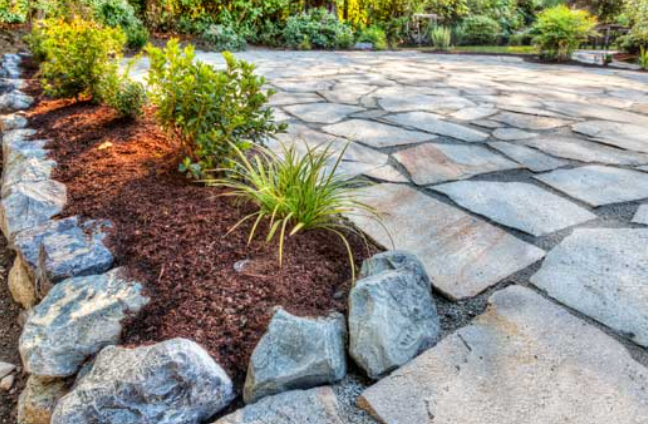
Natural stone has been used in Irish gardens for centuries, and there’s a reason it’s never gone out of fashion. Each slab is unique — with natural variations in colour, texture, and veining that give your patio a character no manufactured product can replicate.
Popular Natural Stone Types in Dublin
Indian Sandstone: The most popular natural stone for patios in Ireland. Warm tones ranging from buff and golden to grey and brown. Naturally riven (textured) surface provides excellent grip in wet weather. Good value compared to other natural stones.
Limestone: Elegant and refined, with a smoother finish than sandstone. Irish Blue Limestone is a premium choice that’s sourced domestically. Slightly more expensive but incredibly hard-wearing and well-suited to Ireland’s climate.
Granite: The hardest natural stone option. Extremely durable and frost-resistant — ideal for high-traffic areas or driveways that double as patios. Available in silver, black, and pink tones. More expensive but virtually indestructible.
Slate: Dark, dramatic appearance. Naturally layered texture. Worth noting that slate can absorb heat in direct sun and may feel warm underfoot during summer.
Pros of Natural Stone
Each slab is genuinely unique — no two patios will ever look the same. Natural stone develops a beautiful patina over time, improving with age rather than fading. It offers excellent grip in wet weather (especially riven sandstone and limestone). Natural stone has strong eco credentials — it’s quarried rather than manufactured. It adds significant kerb appeal and resale value to your property. And high-quality stone like granite can last 50+ years with basic maintenance.
Cons of Natural Stone
Natural stone is porous — it absorbs water, which means it can stain if spills aren’t cleaned quickly. It requires sealing every 2–5 years to maintain protection against moisture, moss, and algae. Softer stones like sandstone can be more susceptible to frost damage over time if not properly sealed. There can be slight variations in thickness between slabs, which requires more skill during installation. And it’s generally heavier than porcelain, which can increase handling and transport costs.
Interested in a natural stone patio for your Dublin garden? Our team specialises in Indian sandstone, limestone, and granite patio installations across Dublin and Kildare. Give us a call on +353 85 778 0394 for a free consultation and quote.
Porcelain Patios: Modern Performance and Low Maintenance
Porcelain paving has transformed the Irish patio market over the past decade. Made from dense clay fired at extremely high temperatures (over 1,200°C), outdoor porcelain tiles are engineered to be tough, non-porous, and virtually maintenance-free. Modern printing technology means porcelain can convincingly replicate the look of natural stone, wood, or concrete — while offering performance characteristics that natural materials simply can’t match.
Pros of Porcelain
Porcelain is non-porous with near-zero water absorption, which makes it highly resistant to frost damage, moss, algae, and staining. It never needs sealing — a major advantage in Ireland’s damp climate. Porcelain is fade-resistant and UV-stable, so the colour won’t change over the years of sunlight. It offers consistent dimensions, which means faster and more precise installation. It’s extremely scratch-resistant and hard-wearing, and it’s available in large-format sizes (up to 1200x600mm) that create a sleek, contemporary look with fewer joints.
Cons of Porcelain
The initial material cost is often higher than that of natural stone. Installation requires specialist adhesive (priming) because porcelain’s non-porous surface makes traditional mortar bedding unreliable — this adds to labour costs. Porcelain can feel colder underfoot than natural stone in cooler weather. While it mimics natural stone well, some homeowners prefer the authentic character of real stone. Porcelain is brittle before installation — slabs can crack if dropped or handled carelessly. And cutting porcelain for complex layouts requires diamond-blade saws and experience.
Head-to-Head Comparison: Natural Stone vs Porcelain for Dublin Patios
Here’s a direct comparison of the two materials across the factors that matter most for Dublin homeowners:
| Factor | Natural Stone | Porcelain |
| Appearance | Unique, organic, each slab different. Develops natural patina over time. | Consistent, uniform finish. Wide range of styles including stone-look, wood-look, and concrete-look. |
| Durability | Very durable. Granite and limestone last 50+ years. Sandstone 25–40+ years. | Extremely durable. Scratch-proof, fade-resistant. 30+ year lifespan. |
| Water Absorption | Porous — absorbs moisture (varies by stone type). Requires sealing. | Non-porous — near-zero absorption (<0.5%). No sealing needed. |
| Frost Resistance | Good when sealed. Some softer stones vulnerable over time. | Excellent. Non-porous surface resists freeze-thaw cycles very well. |
| Moss / Algae | Can develop moss and algae in shaded or damp areas if not sealed. | Highly resistant. Non-porous surface discourages growth. |
| Maintenance | Needs sealing every 2–5 years. Annual cleaning recommended. | Minimal — occasional jet wash or mild soap. No sealing ever. |
| Slip Resistance | Excellent (especially riven sandstone and textured limestone). | Good — choose R11-rated textured finishes for outdoor use. |
| Installation | Requires skill due to varying slab thickness. Mortar bed. | Requires specialist priming adhesive. Precise but faster for experienced installer. |
| Eco Credentials | Quarried natural product. Lower embodied energy. | Manufactured at high temperatures. Higher embodied energy. |
| Cost (Dublin 2026) | €70 – €130/m² installed | €80 – €150/m² installed |
How Do They Perform in Dublin’s Weather?
This is where the decision gets practical. Dublin’s climate presents specific challenges for any patio material: high annual rainfall (over 700mm), regular frost cycles through winter, limited direct sunlight in shaded gardens, and constant dampness that encourages moss and algae.
Rain and Moisture
Porcelain has the clear advantage here. Its non-porous surface means rainwater sits on top and drains away rather than being absorbed into the slab. Natural stone absorbs moisture to varying degrees — sandstone absorbs more than granite or limestone. This absorbed moisture can lead to staining, efflorescence (white salt deposits), and moss growth if the stone isn’t properly sealed.
Frost and Freeze-Thaw Cycles
Dublin typically sees 15–25 frost days per year. When water trapped inside a porous stone freezes, it expands and can cause surface flaking or cracking over time. Well-sealed natural stone handles this well, but neglected stone can deteriorate. Porcelain is essentially immune to freeze-thaw damage because there’s no moisture inside the slab to freeze.
Moss and Algae
In shaded Dublin gardens — particularly north-facing rear gardens — moss and algae are in a constant battle. Natural stone in these conditions will need more frequent cleaning and sealing. Porcelain’s smooth, non-porous surface makes it significantly more resistant, though no material is completely immune in permanently damp, shaded areas.
Not sure which material will work best in your specific garden? We’re happy to visit your property, assess the conditions, and recommend the right option. Get in touch for a free site visit or call +353 85 778 0394.
Patio Costs in Dublin: Natural Stone vs Porcelain (2026)
Here’s what you can realistically expect to pay for a professionally installed patio in Dublin in 2026. These prices include materials, ground preparation, sub-base, installation, and finishing:
| Material | Cost per m² (Installed) | Typical 20m² Patio | Ongoing Maintenance Cost |
| Indian Sandstone | €70 – €100 | €1,400 – €2,000 | Sealing every 3–5 years (€100–€200) |
| Limestone | €85 – €120 | €1,700 – €2,400 | Sealing every 3–5 years (€100–€200) |
| Granite | €100 – €140 | €2,000 – €2,800 | Minimal — very low porosity |
| Porcelain (standard) | €80 – €120 | €1,600 – €2,400 | None — no sealing needed |
| Porcelain (premium/large format) | €110 – €150 | €2,200 – €3,000 | None — no sealing needed |
Important note on installation costs: Porcelain requires a specialist priming adhesive for the back of each slab before laying, which adds €5–€10/m² to the installation cost compared to natural stone. However, porcelain’s consistent thickness means laying is faster, which can partially offset this. Always get an itemised quote that includes ground preparation, sub-base, materials, labour, and waste removal.
Maintenance: What to Expect Long-Term
Natural Stone Maintenance
Seal your natural stone patio within 3–6 months of installation, then reseal every 2–5 years, depending on the stone type and exposure. Clean annually with a pH-neutral stone cleaner (never use acidic products on limestone). Remove moss and algae promptly with an appropriate biocide. For ongoing care, our patio cleaning and repair service can handle everything from routine cleans to full restoration.
Porcelain Maintenance
The beauty of porcelain is its simplicity. An annual jet wash or scrub with warm water and mild detergent is all most porcelain patios need. No sealing, no specialist products, no ongoing costs. In shaded areas where organic matter accumulates, a light cleaning twice a year is sufficient.
Integrating Your Patio with Your Wider Garden Design
A patio doesn’t exist in isolation — it’s part of your wider garden, and the best results come from thinking about how it connects to the spaces around it.
Walkways and paths: Extend your patio material into garden walkways and paths for a cohesive look.
Retaining walls and steps: If your garden has changes in level, stone retaining walls and steps create seamless transitions between patio areas and lawn or planting beds.
Natural stone features: Complement your patio with matching masonry work — such as stone pillars, coping, or a decorative garden wall — to tie the whole space together.
Garden features: A well-placed water feature or garden lighting turns a functional patio into a genuine outdoor living space.
Planning a patio as part of a bigger garden project? We handle everything from design through to installation — patios, walls, steps, fencing, and planting. Call +353 85 778 0394 to talk through your ideas.
So, Which Should You Choose?
There’s no single “best” option — it depends on your priorities. Here’s a quick guide:
Choose natural stone if: you want an authentic, organic look with character that deepens over time; you love the idea of a material that’s been quarried from the earth rather than manufactured; your garden gets reasonable sunlight and airflow (reducing moss risk); and you’re happy to seal and maintain the patio every few years.
Choose porcelain if: low maintenance is your top priority; your garden is north-facing, shaded, or prone to damp; you want a sleek, modern, uniform finish; you prefer a material that won’t change in appearance over time; and you want to avoid any ongoing sealing or treatment costs.
Consider combining both: Some of the most striking patios we’ve installed in Dublin use a combination — for example, a porcelain main patio area for practicality, with natural stone borders, steps, or accent features for warmth and character.
Still undecided? That’s what we’re here for. Our team can show you samples of both materials in your actual garden setting so you can see how they look and feel in your space. Reach out on +353 85 778 0394 or request a free quote online.
Frequently Asked Questions
Q: Is porcelain or natural stone better for a patio in Ireland?
Both perform well in Ireland, but they suit different situations. Porcelain is better for shaded, damp gardens where moss and moisture are persistent problems, thanks to its non-porous surface. Natural stone is ideal if you value authentic character and warmth, and are happy to seal it every few years. For most Dublin gardens, either material will last decades when installed correctly.
Q: How long does a natural stone patio last?
A well-installed natural stone patio in Dublin will last 25–50+ years, depending on the stone type. Granite is the longest-lasting (50+ years), followed by limestone (30–40 years) and sandstone (25–35 years). Proper sealing and maintenance extend lifespan significantly.
Q: Is porcelain paving slippery in the rain?
Not if you choose the right finish. Outdoor porcelain paving with an R11 slip-resistance rating and a textured surface is perfectly safe in wet conditions. Avoid polished or glossy finishes for outdoor patios — always specify a textured, anti-slip outdoor grade.
Q: Can I lay porcelain over an existing patio?
In some cases, yes — if the existing patio is level, structurally sound, and properly drained. However, overlaying adds height, which can cause issues with door thresholds and drainage falls. We generally recommend a full installation on a proper sub-base for the best long-term results.
Q: How much does a patio cost in Dublin?
A professionally installed patio in Dublin typically costs between €70–€150 per square metre, depending on the material. A standard 20m² patio ranges from €1,400 for basic sandstone to €3,000 for premium porcelain. See our detailed cost comparison table above.
Get Expert Patio Installation in Dublin
Whether you’re drawn to the timeless warmth of natural stone or the modern performance of porcelain, the most important factor is expert installation. A beautiful patio built on a poor sub-base or with incorrect jointing will fail within years — regardless of how expensive the slabs are.
At Lion Paving & Landscaping, every patio we install starts with proper excavation, a fully compacted sub-base, and materials laid by experienced tradespeople who understand how each material behaves in Ireland’s climate. We’ve been doing this across Dublin for over 8 years, and our work speaks for itself.
Call us: +353 85 778 0394
Email: sales@lionpavingandlandscaping.ie
Online: Request a Free Quote
Visit us: Get Directions
Lion Paving & Landscaping
259 Birches Rd, Wedgwood, Dublin 16, D16Y5E5
Serving North Dublin, South Dublin, Kildare & Surrounding Areas