
Choosing the right material for your driveway is one of the most important decisions you will make for your home’s exterior. A driveway is not just a functional space—it influences your property value, curb appeal, safety, and long-term maintenance costs. Among the most popular surface materials, asphalt and tarmac often stand out, but many homeowners are still unaware of how they differ.
At Lion Paving And Landscaping, our expert Tarmac Contractors and Tarmac Driveway Installers help customers understand these options so they can make the best decision for their property. Although asphalt and tarmac look similar at first glance, they have distinct differences in composition, strength, cost, and performance.
This comprehensive blog breaks down each material in detail, explains their pros and cons, and helps you understand which surface is best for your home. Whether you’re planning a Modern Tarmac Driveway, an asphalt upgrade, or a Tarmac Resin Driveway, this guide will help you choose with confidence.
What Exactly Is Asphalt?
Asphalt is a petroleum-based mixture consisting of bitumen (a sticky black binder) and various aggregates like sand, stone dust, gravel, or crushed rock. It is heated to a high temperature and then poured and compacted to create a smooth, durable finished surface.
How Asphalt Is Made
-
Crushed aggregates are combined in a hot mix plant.
-
Bitumen is added as a binding agent.
-
The mixture is kept hot until it reaches the installation site.
-
The hot asphalt is applied, levelled, and compacted using heavy rollers.
The result is a seamless, water-resistant surface ideal for driveways, highways, and high-traffic areas.
Characteristics of Asphalt
-
Smooth and modern appearance
-
Highly flexible during temperature changes
-
Excellent load-bearing strength
-
Easy to repair and maintain
This makes asphalt one of the most desired materials for contemporary and heavy-use driveways.
What Is Tarmac?
Tarmac—short for Tar Macadam—was originally invented in the early 1900s. Traditional tarmac was made using tar (a by-product of coal production), but modern tarmac typically uses bitumen instead of tar because it’s safer and more stable.
How Tarmac Is Made
-
Crushed stone or aggregates are coated with heated tar or bitumen.
-
The mixture is laid onto a prepared base.
-
The surface is compacted to create a solid, tough layer.
Tarmac remains a favourite for domestic driveways because it provides a classic, textured finish while being quick to install.
Characteristics of Tarmac
-
Excellent grip and skid resistance
-
Classic, slightly rough surface texture
-
Cost-effective installation
-
Performs well in cold and wet climates
Tarmac is preferred by many homeowners looking for a dependable, practical driveway material.
Asphalt vs Tarmac: A Detailed Comparison
To understand the major differences, let’s compare both materials in terms of structure, performance, cost, longevity, and suitability.
1. Composition
Asphalt
-
Bitumen + sand + crushed rock
-
Consistent mix designed for flexibility and strength
Tarmac
-
Tar/bitumen + crushed aggregates
-
More traditional structure
-
Slightly rougher texture
Key Difference: Asphalt uses a more refined mixture, making it stronger and smoother than tarmac.
2. Aesthetic Appearance
Asphalt Driveways
-
Sleek black finish
-
Clean and contemporary
-
Ideal for modern homes
-
Smooth and uniform surface
Tarmac Driveways
-
Textured, classic driveway look
-
Slightly grainy surface
-
Available in smooth or rough finishes depending on installation
-
Ideal for older or rustic-style homes
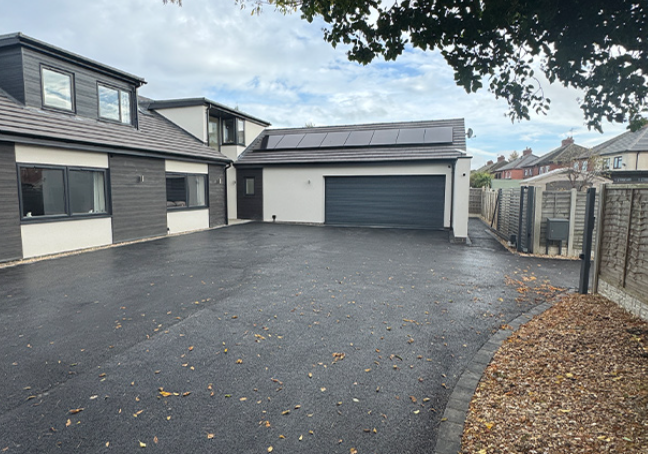
If you’re aiming for a Modern Tarmac Driveway look, asphalt generally provides a more refined visual appeal.
3. Durability and Lifespan
Asphalt
-
More flexible
-
Adapts easily to temperature changes
-
Higher load-bearing capacity
-
Lifespan: 20–30+ years with proper care
Tarmac
-
Strong but slightly less flexible
-
Better grip but can wear faster under heavy loads
-
Lifespan: 15–20 years
Key Difference:
Asphalt is more durable for heavy vehicles and high-traffic driveways, while tarmac is ideal for everyday domestic use.
4. Maintenance Requirements
Asphalt Maintenance
-
Benefits from sealing every 3–5 years
-
Easy to patch cracks
-
Does not erode easily
-
Low long-term maintenance costs
Tarmac Maintenance
-
Requires surface dressing every few years
-
Can soften in extremely hot temperatures
-
Repairs are simple but may leave colour variations
If you want minimal future maintenance, asphalt may offer a slight advantage.
5. Weather Resistance
Asphalt
-
Performs better in hot climates
-
Less likely to melt or soften
-
Very resistant to UV rays
Tarmac
-
Excellent in cold and wet environments
-
Strong grip prevents slipping
-
Resistant to frost damage
Your environment matters:
Choose tarmac if you live in a colder region; choose asphalt if heat and heavy loads are concerns.
6. Installation Time
Tarmac
-
Faster to lay
-
Suitable for urgent projects
-
Can be installed in just one day depending on area
Asphalt
-
Requires proper heating and preparation
-
Curing time may be slightly longer
-
Installation is still relatively quick
For instant results, Local Tarmac Contractors often recommend tarmac.
7. Cost Comparison
While prices vary based on location, labour, and materials:
-
Tarmac Driveways – Usually more affordable upfront
-
Asphalt Driveways – Slightly higher initial cost but lower lifetime maintenance
Best Value?
Asphalt offers better long-term performance, but tarmac is more cost-effective for budget-friendly driveway projects.
What About Tarmac Resin Driveways?
A Tarmac Resin Driveway combines the strength of a tarmac base with a decorative resin-bound surface.
Advantages of Tarmac Resin Driveways
-
Stunning appearance (modern and stylish)
-
UV-resistant
-
Anti-slip finish
-
Low maintenance
-
Available in many colours and stone blends
-
Perfect for upgrading old tarmac bases
This option is ideal for homeowners wanting the Best Tarmac for Driveways with added curb appeal.
Which Surface Is Best for You?
Choose Asphalt If You Want:
✔ A sleek, modern, stylish finish
✔ Maximum durability
✔ A smooth surface ideal for cars
✔ Long lifespan with minimal cracking
Choose Tarmac If You Want:
✔ A cost-effective, quick installation
✔ Good grip and traditional driveway look
✔ Excellent weather resistance
✔ Long-lasting performance for domestic use
Choose Resin-Bound Tarmac If You Want:
✔ A decorative surface with superior appearance
✔ Strong foundation + beautiful top layer
✔ A customised driveway finish
Why Choose Lion Paving And Landscaping?
At Lion Paving And Landscaping, we are industry-leading Tarmac Contractors, known for our craftsmanship, experience, and reliability.
Why Homeowners Trust Us:
-
Highly skilled Tarmac Driveway Installers
-
Local Tarmac Contractors with years of expertise
-
Premium-grade materials
-
Modern equipment for flawless finishes
-
Fully guaranteed work
-
Competitive pricing
-
Complete driveway solutions including asphalt, tarmac, resin, block paving & landscaping
Whether you want a Modern Tarmac Driveway, a premium asphalt installation, or a stylish Tarmac Resin Driveway, we deliver driveways that are built to last.
Conclusion: Asphalt or Tarmac—Which One Is Right for You?
While asphalt and tarmac may look similar, they differ significantly in composition, durability, appearance, and performance.
-
Asphalt is smooth, modern, and strong—ideal for heavy use.
-
Tarmac is cost-effective, traditional, and weather-resistant—perfect for domestic settings.
-
Resin-bound tarmac offers beauty and durability combined.
Whatever your choice, the quality of tarmac driveway installation makes the biggest difference. At Lion Paving And Landscaping, our expert team ensures your driveway is professionally laid, long-lasting, and visually stunning.
If you want help choosing the perfect material or want a free quote, we’re here to assist.