

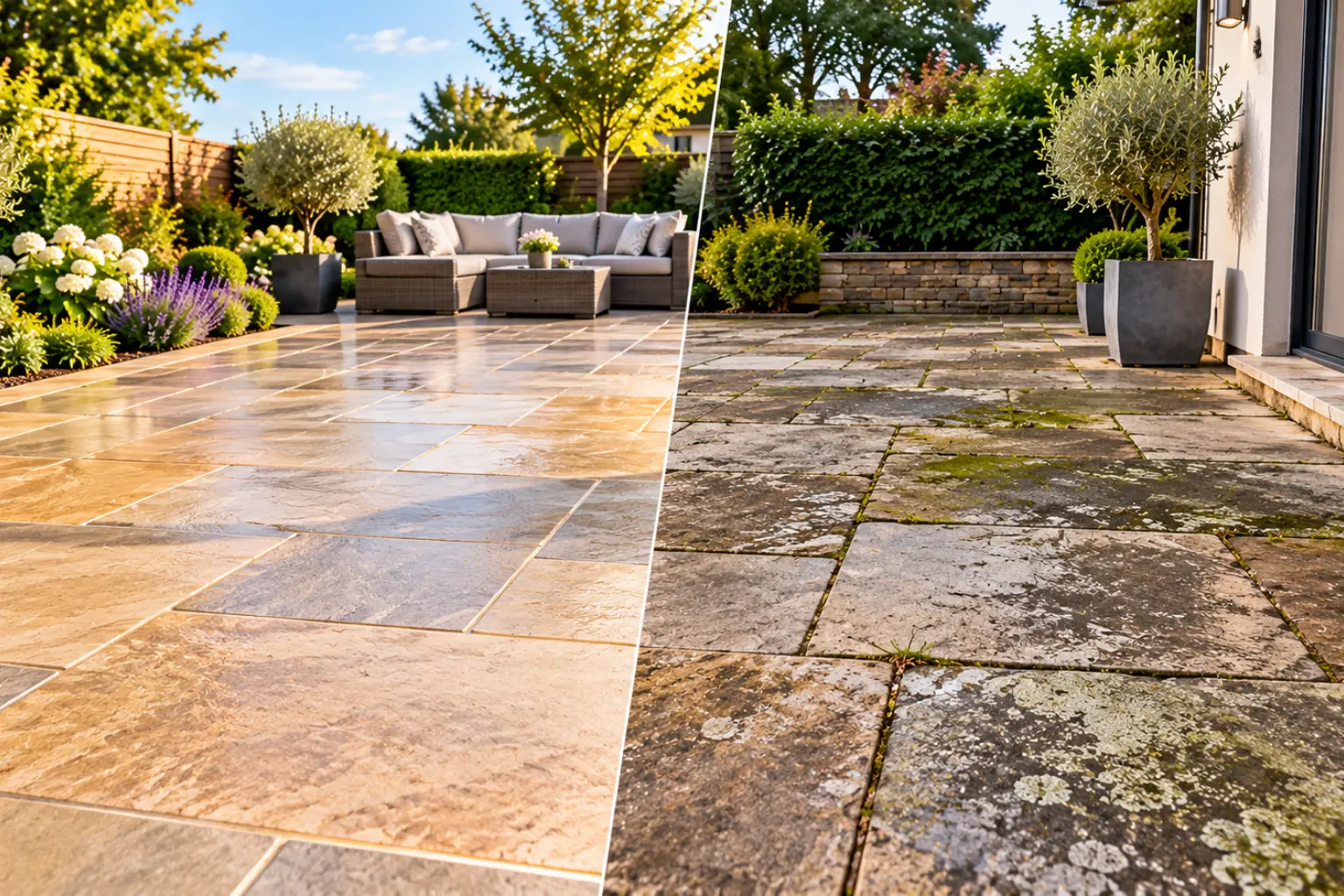
You have just invested €2,000–€3,000 in a beautiful Indian sandstone or limestone patio. The contractor mentions sealing and quotes €200–€400 for the job. You decide to save the money and skip it. After all, stone is natural — surely it can handle a bit of rain? Fast forward 12–18 months in Dublin’s climate, and the story becomes familiar: the warm golden tones have faded to a dull grey-green. Algae coats the surface after every wet spell. Leaf stains and bird droppings have left permanent marks. And the first winter frost has caused surface flaking on the most exposed slabs. Sealing a patio in Ireland’s wet climate is a small cost that prevents all of this.
This guide explains exactly what happens to an unsealed natural stone patio in Dublin’s conditions, when sealing is essential, and how to do it properly. Based on Lion Paving & Landscaping’s experience maintaining and restoring hundreds of natural stone patios across Dublin.
What Happens to Unsealed Natural Stone in Dublin’s Climate
Staining from Organic Matter
Natural stone — particularly Indian sandstone and limestone — is porous. It absorbs liquids that come into contact with the surface. In Dublin’s garden environment, the main culprits are fallen leaves (especially berry-bearing trees and shrubs), bird droppings, BBQ grease and food spills, and tannin from timber furniture or planters. On an unsealed surface, these stains absorb into the stone and become permanent. On a sealed surface, they sit on top and can be wiped away.
Algae and Moss Growth
Dublin’s 700–800 mm of annual rainfall and frequent overcast conditions create ideal conditions for algae and moss. On porous, unsealed stone, algae establishes within the surface texture and becomes extremely difficult to remove without aggressive cleaning. On sealed stone, algae sits on the surface barrier and washes off with a simple clean. In shaded areas (common in Dublin rear gardens), the difference between sealed and unsealed patios is dramatic within the first winter.
Frost Damage (Spalling)
When porous stone absorbs moisture, and that moisture freezes, it expands within the stone’s structure. This freeze-thaw cycle causes surface flaking known as spalling — the top layer of the stone peels away, leaving a rough, pitted surface. Dublin typically experiences 30–40 frost days per year (November–March), meaning unsealed natural stone goes through dozens of freeze-thaw cycles every winter. Sealing reduces moisture absorption dramatically, largely eliminating spalling risk.
Colour Fading and Darkening
Unsealed natural stone in Dublin gradually loses its original colour. Sandstone that started as warm Raj Green darkens to a muddy grey-green. Limestone that started as crisp blue-grey develops a patchy, discoloured appearance. The stone is not damaged — but the aesthetic appeal that you paid for is significantly diminished. A quality sealer preserves the stone’s natural colour and can even enhance it slightly, keeping the patio looking as it did on the day it was installed.
Which Natural Stones Need Sealing in Dublin?
| Stone Type | Porosity | Sealing Recommended? | Resealing Frequency |
|---|---|---|---|
| Indian sandstone (Raj Green, Kandla Grey) | High | Strongly recommended | Every 3–5 years |
| Limestone (imported black, cream) | High | Essential | Every 3–5 years |
| Irish Blue Limestone | Low–Medium | Beneficial but not essential | Every 5–7 years |
| Granite | Very low | Not needed | N/A |
| Porcelain | Near-zero | Not needed | N/A |
| Concrete slabs | Medium | Recommended | Every 3–5 years |
How to Seal Your Natural Stone Patio Properly
Wait until the patio is fully cured (at least 4–6 weeks after installation for mortar to cure completely). Clean the surface thoroughly and allow it to dry fully — you need 48–72 hours of dry weather for both cleaning and sealing. Choose an impregnating sealer (not a surface-coating sealer). Impregnating sealers soak into the stone, protecting from within without changing the natural appearance or creating a glossy film that can become slippery when wet. Apply with a roller, brush, or low-pressure sprayer following the manufacturer’s instructions. One to two coats are typically sufficient. Allow 24 hours before foot traffic.
Our recommendation: We use and recommend impregnating sealers from reputable brands for all natural stone patios in Dublin. See our patio cleaning and repair service for professional sealing.
Sealing a Patio in Ireland: Costs in Dublin (2026)
| Service | Cost | Notes |
|---|---|---|
| DIY sealer (5-litre tin, covers 15–25m²) | €40–€80 | One to two coats required |
| Professional sealing (supply + application) | €8–€15/m² | Including surface preparation |
| Typical 20m² patio (professional) | €160–€300 | Applied after cleaning |
| Combined cleaning + sealing (professional) | €250–€500 | Pressure wash, clean, dry, and seal |
Need Your Patio Sealed or Restored?
We offer professional patio cleaning, sealing, repointing, and restoration across Dublin. Protect your investment and keep your natural stone looking its best.
Call us today: +353 85 778 0394
Or request a free quote on our contact page.
Frequently Asked Questions
Q: Do I need to seal my Indian sandstone patio in Dublin?
Strongly recommended. Indian sandstone is porous, and Dublin’s wet climate causes rapid staining, algae growth, and frost damage on unsealed surfaces. Sealing protects the stone, preserves its colour, and makes maintenance significantly easier.
Q: How often should I reseal my natural stone patio?
Every 3–5 years for Indian sandstone and imported limestone. Every 5–7 years for Irish Blue Limestone. You will know it is time to reseal when water stops beading on the surface and starts soaking in.
Q: Does sealing make a patio slippery?
Not if you use an impregnating sealer. Impregnating sealers soak into the stone without creating a surface film. Surface-coating sealers (which create a glossy finish) can become slippery when wet and are not recommended for outdoor patios in Dublin.
Q: Can I seal an old patio that was never sealed?
Yes. Clean the patio thoroughly first (professional pressure washing recommended), allow it to dry fully, and apply the sealer. The stone will still benefit significantly from sealing, even years after installation.
Q: Do porcelain or granite patios need sealing?
No. Porcelain has near-zero porosity, and granite has very low porosity. Neither material absorbs moisture, and neither requires sealing. This is one of the key maintenance advantages of porcelain and granite over sandstone and limestone.
Protect Your Natural Stone Patio
Visit our patio cleaning and repair page or contact us for a free patio assessment.
Call us: +353 85 778 0394
Email: sales@lionpavingandlandscaping.ie
Online: Request a Free Quote
Visit us: Get Directions
Lion Paving & Landscaping
259 Birches Rd, Wedgwood, Dublin 16, D16Y5E5
Serving North Dublin, South Dublin, Kildare & Surrounding Areas